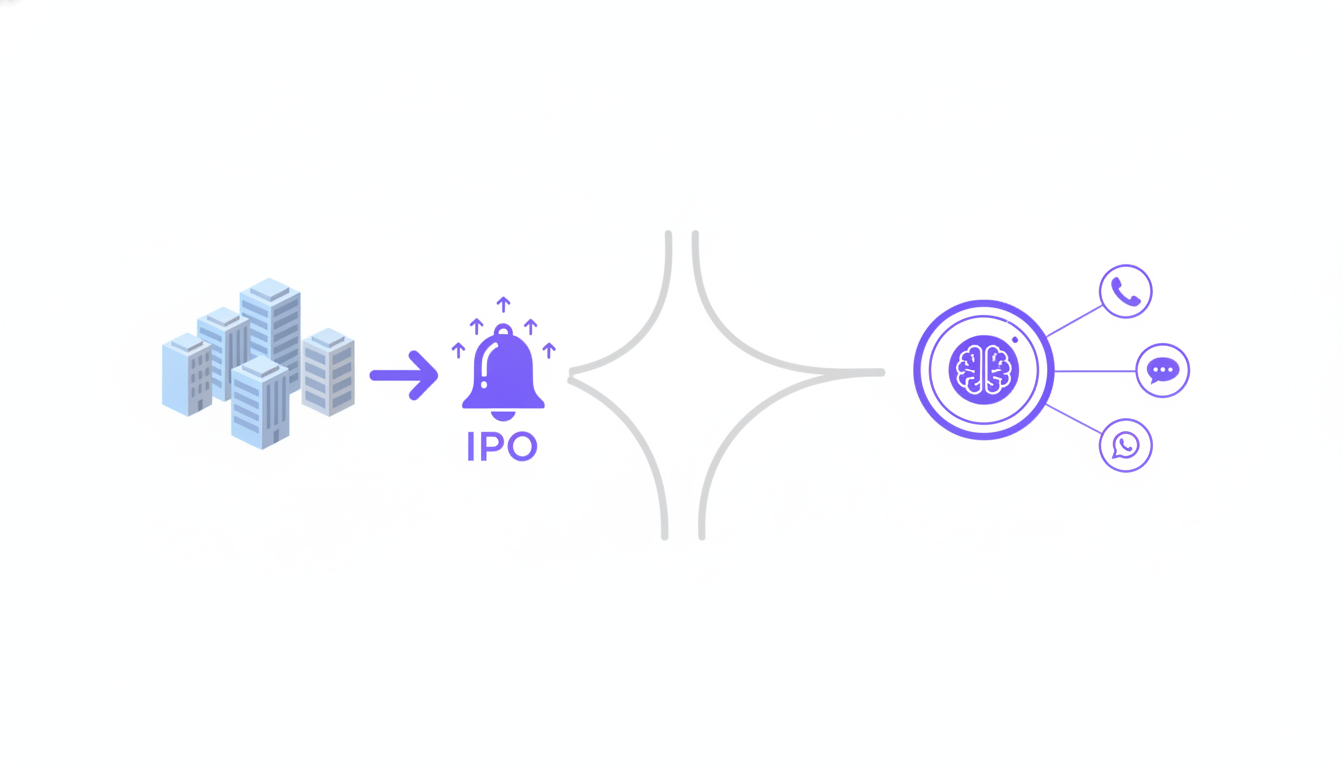
Yellow.ai has spent the past decade becoming one of the most recognizable names in enterprise conversational AI — the platform behind WhatsApp deployments for regional retailers like Lulu Hypermarket and a genuinely global customer list spanning 85+ countries. On August 3, 2026, it made a much bigger move: a definitive agreement to go public via a $550 million merger with Bluerock Acquisition Corp (Nasdaq: BLRK), a special-purpose acquisition company. The deal isn't just a funding milestone. It comes bundled with a strategic pivot — Yellow.ai says it plans to use the proceeds to acquire business-process outsourcing (BPO) operators and rebuild them around its AI agents, rather than simply selling more platform seats.
That combination — going public plus a roll-up strategy — is exactly the kind of news that sends existing and prospective Yellow.ai customers searching for alternatives. Not because the product got worse, but because two ordinary vendor-selection questions just got more complicated: what does a SPAC-funded, acquisition-hungry Yellow.ai look like in eighteen months, and does a platform pivoting into outsourcing services still fit a business that just wants a reliable AI agent across chat, WhatsApp, and voice? Here's what's actually confirmed about the deal, and an honest look at the platforms worth comparing it against.
What's actually in the deal
A few specifics are worth being precise about, since SPAC deals often get flattened into a single headline number. Under the agreement, Yellow.ai carries a pre-money valuation of roughly $300 million, and the combined company is expected to have a pro forma equity value of about $550 million. The deal is expected to close in the second half of 2026, after which the combined entity will trade on the Nasdaq Capital Market under the ticker "YAI."
On the funding side, the structure includes roughly $175 million sitting in Bluerock's trust account — a figure that assumes no shareholder redemptions, which is a meaningful caveat, since SPAC trust accounts routinely see investors cash out ahead of a merger closing — plus a committed $30 million PIPE (private investment in public equity) financing. Combined, that's more than $200 million in expected gross proceeds, which Yellow.ai says it will use to invest in the platform, expand its North America and Europe sales teams, and fund what it's calling a "disciplined M&A strategy" targeting BPO operators.
On the business side, Yellow.ai has real scale to point to: over $34 million in unaudited revenue for its last fiscal year, more than 70% of it recurring from enterprise accounts, and a claimed 16 billion conversations processed annually across 650+ enterprise clients in 85+ countries and 135+ languages. The company was founded in 2016 by Raghu Ravinutala, Rashid Khan, and Jaya Kishore Reddy (originally as Yellow Messenger), and had raised roughly $103 million from investors including Lightspeed, Salesforce Ventures, Sapphire Ventures, and WestBridge Capital before this deal.
The bigger story is the roll-up, not the IPO
Going public via SPAC is the less unusual part of this announcement. The more consequential detail is what Yellow.ai says it plans to do with the money: buy outsourcing companies.
The logic, as the company has framed it, is about capturing a bigger slice of a much larger market. Labor costs make up roughly 85% of the estimated $384 billion global outsourcing industry, and Yellow.ai's stated bet is that the AI-agent share of that spend will grow sharply over the next decade — from around $12 billion today to as much as $295 billion by 2035, by the company's own projection. Rather than just selling software licenses to enterprises that run their own service desks, Yellow.ai wants to own the outsourcing operations directly and convert them to run on its AI agents. It has reportedly brought in executives specifically for this — including one with outsourcing-operations experience and another with a private-equity roll-up background — which suggests this isn't a throwaway line in a press release but an actual operating plan.
CEO Raghu Ravinutala put the thesis plainly: "BPOs, with a large US market, mainly driven by humans, will move to agents that plan, act and resolve — and the platform enterprises trust to run it will define the category."
For a buyer, that's worth sitting with for a second. Acquiring and integrating outsourcing firms is a fundamentally different operational discipline than licensing software — it means payroll, staff attrition, and client-contract exposure that a pure SaaS platform never has to manage. If that roll-up strategy works, Yellow.ai could end up as a genuinely differentiated combination of technology and delivery. If it's a distraction, the platform investment existing customers care about could slow down while the company is busy integrating call centers. Either way, it's a different company than the one that signed your current contract, and it's reasonable to want to know that before renewing.
What to actually compare before you shortlist alternatives
Before evaluating specific platforms, it helps to be precise about which of Yellow.ai's traits actually matter to your business:
Pricing transparency — Yellow.ai's enterprise tier is quote-based with no published rate card, which is common among enterprise conversational AI vendors but still means you can't budget without a sales call. Does your business have the leverage and patience for that process, or would a platform with predictable, published pricing serve you better?
Channel depth versus channel breadth — Yellow.ai covers a wide range of channels across a huge geographic footprint. If your volume is concentrated in a specific channel or region, a more focused platform may go deeper where you actually need it.
Vendor focus, right now — is the company you're signing with optimizing purely for your product experience, or is a meaningful share of its next eighteen months going toward integrating acquired BPOs and a public-market transition?
Human hand-off quality — when the AI can't resolve something, does a human agent get full context and suggested next steps, or a raw transcript to sort through cold?
Regional language depth — for Gulf and MENA businesses specifically, is Arabic support a genuine dialect-level capability, or a translation layer sitting on top of an English-first model?
The alternatives, honestly assessed
Ada
Ada remains the closest match to Yellow.ai in ambition — an enterprise-grade AI customer service platform with deep integrations and a strong reputation among large CX organizations. Like Yellow.ai, it doesn't publish pricing, so you're trading one quote-based negotiation for another. It's a reasonable option if you need enterprise-scale deployment support and have the budget and timeline for a longer sales and implementation process; it doesn't solve the pricing-opacity problem, only the roll-up-uncertainty one.
Intercom Fin
Fin is worth a look if outcome-based pricing doesn't scare you and your support volume is chat-and-email heavy — it's a mature product with a large customer base, though it's itself mid-acquisition, with Salesforce having agreed to acquire it earlier in 2026. If avoiding "vendor in transition" risk is the whole point of leaving Yellow.ai, it's worth knowing Fin carries a version of that same uncertainty right now.
Teammates.ai
If Arabic-dialect depth is the single most important gap in your current setup, Teammates.ai is a directly relevant alternative — it's built with Arabic-speaking markets as a core use case rather than an add-on, which is where several larger global platforms, Yellow.ai included, tend to rely more heavily on translation than native dialect handling.
Qalyb
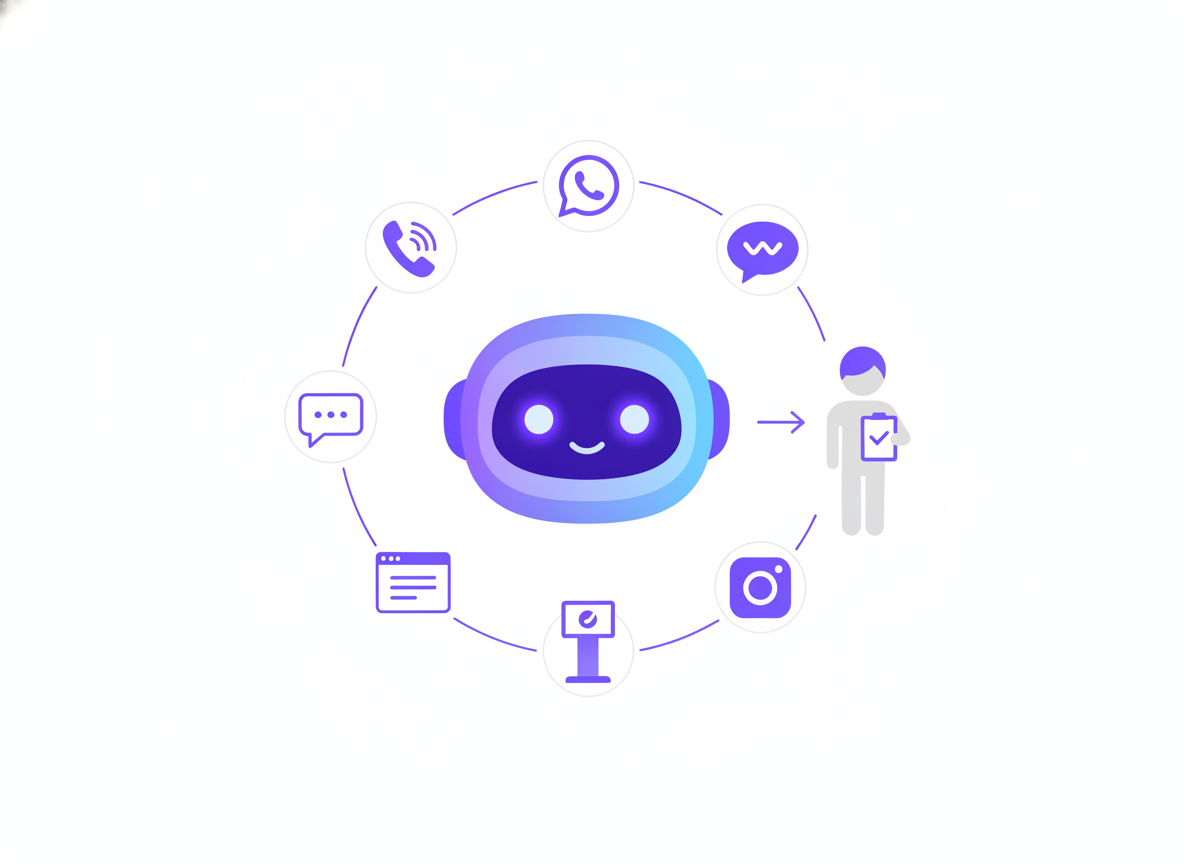
Qalyb starts from a narrower, more focused premise than Yellow.ai's roll-up strategy: one AI agent across voice, WhatsApp, Instagram, Messenger, kiosk, and web chat, built on a single knowledge base, with a built-in human-agent co-pilot — live suggested responses, knowledge search, and call or chat summaries — so a hand-off carries context instead of dumping a cold transcript on a human agent. Its language support is Arabic- and Gulf-dialect-first rather than a translation layer bolted onto an English-native model, which matters specifically for businesses serving Gulf customers day to day. It's also privately operated and not mid-transaction, which for some buyers is a feature in its own right this year.
Side-by-side
| Yellow.ai | Ada | Intercom Fin | Teammates.ai | Qalyb | |
|---|---|---|---|---|---|
| Pricing model | Custom quote, unpublished | Custom quote, unpublished | Per-resolution + base plan | From published low-end plans | Transparent, usage-based |
| Corporate status (2026) | Going public via SPAC; BPO roll-up strategy | Independent | Being acquired by Salesforce | Independent | Independent |
| Channel breadth | Very wide (chat, WhatsApp, voice, and more) | Wide, enterprise-focused | Chat, email, WhatsApp, voice, Slack | WhatsApp, phone, email, chat | Voice, WhatsApp, Instagram, Messenger, kiosk, web chat |
| Human hand-off | Enterprise-tier | Enterprise-tier | Yes (enterprise) | Limited | Built-in on all plans |
| Arabic dialect depth | Translation-layer | Translation-layer | Translation-layer | Strong, Arabic-first | Native, Gulf/Omani-first |
| Best for | Global enterprises comfortable with a vendor mid-transition | Large, complex enterprise deployments | Chat/email-heavy support at scale | Arabic-first, WhatsApp-centric SMBs | Omnichannel Gulf support with native dialect depth |
How to choose
If your organization is genuinely global, enterprise-scale, and unbothered by a vendor that's about to be publicly traded and acquisition-hungry, Yellow.ai's breadth is still a real asset — its 650+ enterprise client base and 16-billion-conversation scale aren't hypothetical. If enterprise budget and a longer procurement cycle aren't obstacles and you want deep, proven integrations, Ada is worth a look on its own merits, separate from Yellow.ai's news. If your volume is chat-and-email dominant and you're comfortable with outcome-based billing, Fin is mature, if itself in the middle of an ownership change. And if Arabic-speaking customers — particularly Gulf-dialect speakers — are a meaningful or growing share of your traffic across voice, WhatsApp, and Instagram, Qalyb and Teammates.ai are the two platforms built around that requirement rather than adding it on afterward, with Qalyb's difference being deeper native channel coverage plus a human co-pilot baked into every plan.
The honest verdict
None of this means Yellow.ai is a bad platform — it built a genuinely large, global business over ten years, and a SPAC merger with a stated growth plan isn't automatically a red flag. But "acquisition-funded BPO roll-up in progress" is a materially different vendor profile than "software company selling you a subscription," and it's a fair reason to at least benchmark alternatives this year, especially if your business depends on dialect-accurate Arabic support or predictable pricing that a quote-based enterprise sales process doesn't easily provide.
See how Qalyb compares on your specific channels and languages — book a demo and bring your actual conversation volume and current vendor quote.