Meta's WhatsApp Business Agent Is Live: What It Actually Does, What It Doesn't, and When You Need More
On June 3, 2026, at its Conversations event in London, Meta announced that its AI-powered Business Agent for WhatsApp is now rolling out globally — free to start, available inside the WhatsApp Business app, and already used by more than a million businesses during roughly two years of testing in India and Mexico. For any business running support or sales over WhatsApp, Instagram, or Messenger, this is not a minor product update. Meta's own numbers put more than a billion active daily conversation threads across those apps, and in markets like the UAE and Kuwait, WhatsApp penetration sits around 90% of the adult population, according to Infobip's 2026 messaging data. When the platform that already carries most of your customer conversations builds its own AI agent directly into the app, it changes the calculation for anyone comparing a native option against a dedicated AI platform.
So here's an honest look at what Meta's Business Agent actually does, where it genuinely holds up, where it still falls short, and how to think about the decision if you're currently running WhatsApp support for a business in the Gulf or anywhere else.
What Meta actually announced
The Business Agent is built into the WhatsApp Business app (and rolling out across Instagram DMs and Messenger) and is designed to run a real conversation rather than just answer canned questions. According to Meta's own announcement and independent coverage from TechCrunch and WABetaInfo, it can field FAQs, recommend products from a connected catalog, qualify leads, book appointments, walk a customer through a purchase, and hand off to a human when a conversation needs one. Businesses choose how much control to give it — a fully manual "My reply" mode, an AI-suggestions mode where a human approves each response, or full autonomous handling — and it's meant to learn a business's tone from past conversations rather than sound like a generic bot. It also produces daily summaries of overnight activity and flags conversations that were missed, which is a genuinely useful operational feature on its own.
Pricing, for now, is straightforward: access is free to start, folded into existing WhatsApp Business plans for smaller accounts. Meta has said that "in the coming months, businesses will access the agent through paid subscription offerings, with options for businesses of every size," with larger organizations expected to be billed by AI usage and token consumption once those tiers launch. In other words, the free version available today is very likely not the final pricing model — worth factoring in before building a workflow entirely around it.
Why this matters more in the Gulf than almost anywhere else
This isn't a niche update. WhatsApp is already the default customer-contact channel across the GCC — Infobip's 2026 data puts adoption at roughly 90% of the adult population in both the UAE and Kuwait, with WhatsApp Business messages seeing open rates around 98%, a figure Infobip attributes to WhatsApp's own reporting. A regional breakdown of the rollout also confirms the Business Agent supports multilingual responses, including Arabic, out of the box. For a Gulf business, that means the update is effectively live for the channel carrying the overwhelming majority of customer conversations, right now, whether or not you've configured anything.
That's exactly why it's worth being precise about what "supports Arabic" means here. Broad multilingual coverage across a general-purpose model is a different thing from an agent tuned specifically for Gulf or Omani dialect nuance — the kind of thing that shows up in whether a reply reads as natural to a Saudi or Emirati customer or as a competent but slightly generic translation. Nothing in Meta's public materials claims dialect-level tuning; it's a broad, general multilingual capability, which is worth actually testing against your own customers' phrasing before assuming it performs the same way a Gulf-dialect-first platform would.
What it's genuinely good at
Credit where it's due: this is a serious product, not a gimmick. It's free to activate, it lives inside an app most businesses already use daily, there's no separate vendor contract or integration project required to get a basic version running, and the underlying reach is enormous. For a small business fielding simple, repetitive WhatsApp questions — hours, pricing, order status, basic product picks from a catalog — turning this on is a low-effort way to stop missing messages overnight and cut response times immediately. That's a real, immediate win, and pretending otherwise would be dishonest.
The honest limitations
The gaps show up once a business needs more than a single-channel FAQ assistant — and for most businesses with any real support or sales volume, that happens fast.
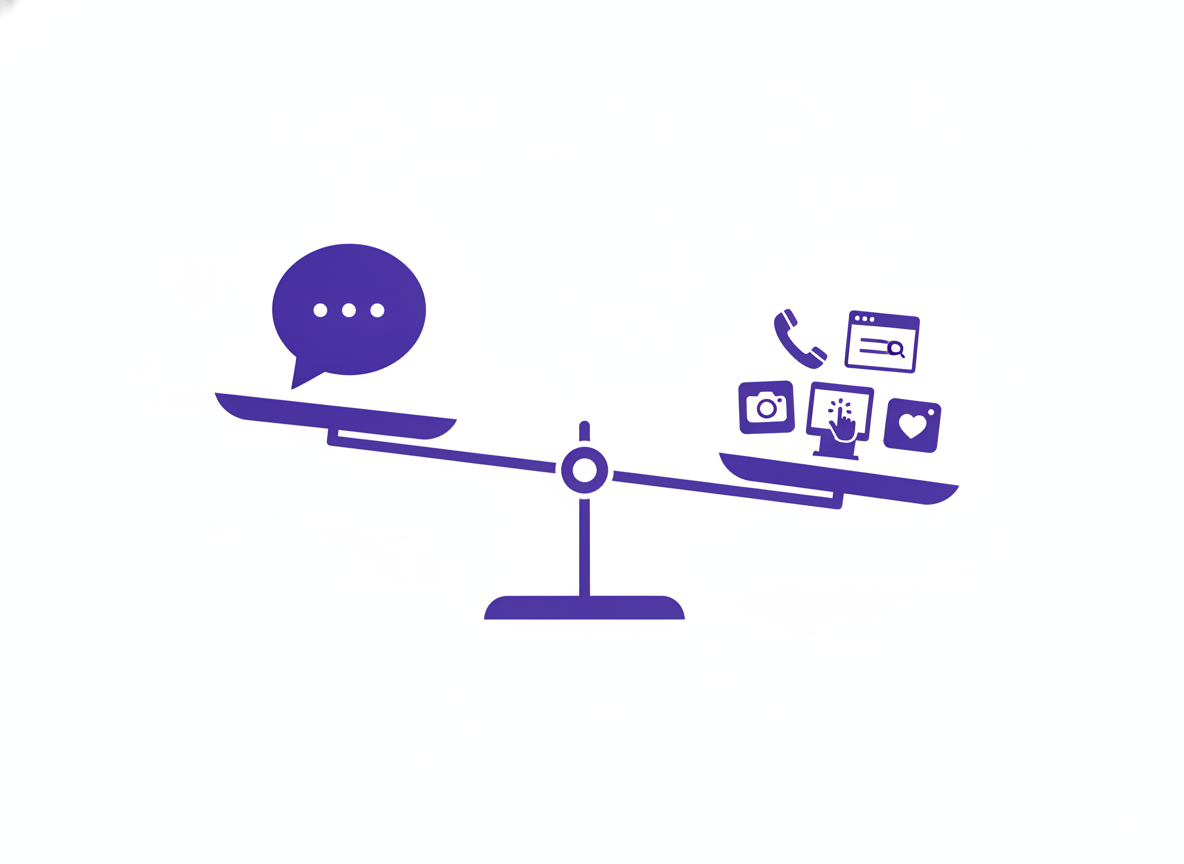
There's no voice channel, at all. The Business Agent is text-only across WhatsApp, Instagram, and Messenger. If a customer's issue is urgent enough to need a phone call — a delayed delivery days before a deadline, a complaint that needs a human tone, a sale that closes faster over voice than text — there's nothing here for that. It doesn't touch a business's website chat widget or an in-store kiosk either; it only covers Meta's own apps.
On the free tier, it only responds — it doesn't reach out. Independent breakdowns of the self-serve version note it can't send broadcast campaigns or segmented outbound messages, which rules out proactive use cases like shipping updates, back-in-stock alerts, or win-back campaigns unless a customer messages first.
Team and system connectivity are limited at the self-serve level. Reporting on the free tier describes no multi-agent routing or SLA management — workable for one person managing a single inbox, but not for a support team that needs conversations assigned, tracked, and escalated by rule. The same coverage notes no CRM connectivity and no API or webhook access at this tier, so a Salesforce, HubSpot, or custom backend stays disconnected unless and until Meta's promised enterprise tiers arrive with pricing attached.
Conversation data stays inside Meta's infrastructure. Independent analysis of the rollout states that conversations run through the free tier remain within Meta's systems and can be used to help train Meta's own models — a reasonable trade for a free product, but a real consideration for any business that wants clear ownership and portability of its own customer conversation data, separate from the platform that also sells ads against that same customer base.
Meta Business Agent vs. a dedicated omnichannel AI platform
| Meta Business Agent (free / self-serve tier) | A dedicated omnichannel AI platform (e.g., Qalyb) | |
|---|---|---|
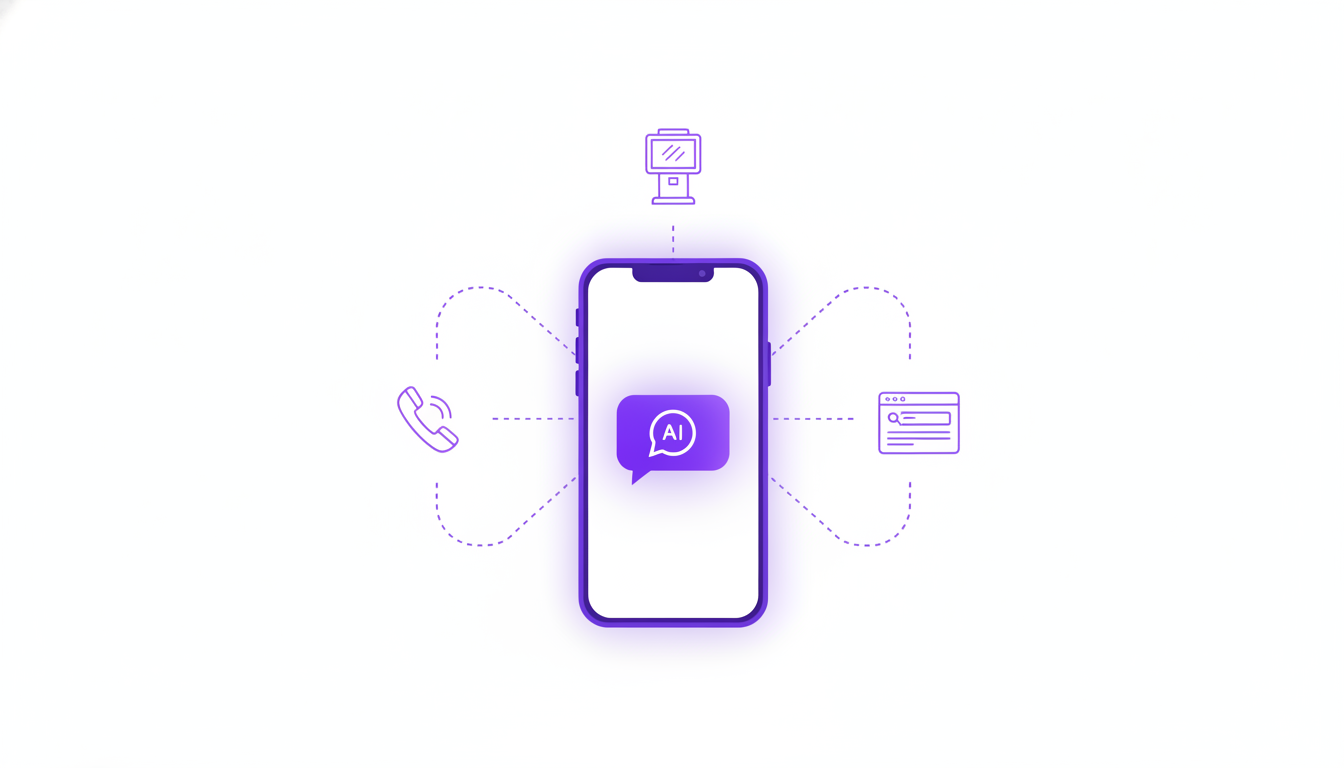
| Channels covered | WhatsApp, Instagram DMs, Messenger only | Voice, WhatsApp, Instagram, Messenger, kiosk, and web chat — one agent, one knowledge base |
| Voice support | None | Native, independent phone/voice channel |
| Proactive outreach | Responds only; no broadcast or campaign sending | Built-in outbound campaigns and proactive messaging |
| Team routing & escalation | Single-user, no SLA or multi-agent tools | Human-agent co-pilot with response suggestions, summaries, and routing |
| CRM / API access | Not available at self-serve tier | Available, with integrations built for support workflows |
| Data ownership | Stays inside Meta's infrastructure | Owned by the business |
| Language depth | Broad multilingual, including Arabic | Arabic-first, including Gulf and Omani dialect |
| Cost model | Free now; usage/token-based paid tiers coming | Transparent, usage-based pricing |
So, do you actually need more than the native agent?
If your business is small, your volume is genuinely simple, and WhatsApp is your only real customer-contact channel, turning on Meta's Business Agent this week is a reasonable, low-cost first step — there's little downside to a free tool that reduces missed messages. Where it stops being enough is exactly where most growing businesses end up anyway: once you need a phone channel for urgent conversations, once your customers also reach you through a website widget or an in-store kiosk, once a human support team needs conversations routed and escalated with real context instead of a cold handoff, once proactive messaging (shipping updates, restock alerts, reminders) matters to your business, or once you want a clear answer to where your customer conversation data lives and who can use it.
For a lot of Gulf businesses specifically, there's an additional variable worth testing directly rather than assuming: whether Meta's general multilingual handling actually reads as natural, dialect-accurate Arabic to your specific customer base, or whether it reads as a competent but generic translation. That's a five-minute test with your own real customer messages, and it's worth running before deciding the native agent covers your Arabic-language needs end to end.
What to do about it this week
Regardless of which way you lean, three things are worth doing immediately: pull the last 30 days of WhatsApp conversations and identify the handful of questions that make up most of your volume, decide deliberately which interaction mode (manual, AI-suggested, or full AI) matches your comfort level rather than defaulting to whatever's pre-selected, and connect your product catalog if you sell physical goods, since that's where the agent's recommendation quality actually shows up. None of that locks you into anything — it's the same groundwork you'd do before evaluating any AI support tool, native or third-party.
The honest verdict
Meta building an AI agent directly into WhatsApp was inevitable, and for straightforward single-channel use cases, it's a legitimate, free option worth activating. But "Meta now has an AI agent" and "you no longer need a dedicated omnichannel platform" are two different claims, and the gap between them — voice, kiosk and web coverage, proactive outreach, team escalation with context, data ownership, and genuine dialect depth rather than broad multilingual coverage — is exactly where most businesses with real support or sales volume still land. The native agent is a good on-ramp. It's not, at least yet, a replacement for a platform built to unify every channel a customer actually uses.
See how Qalyb handles voice, WhatsApp, Instagram, kiosk, and web chat as one agent — book a demo and bring your own WhatsApp conversation history to compare.