ElevenLabs Agents Alternatives in 2026: What the $11B Valuation and Channel Expansion Really Mean for Buyers
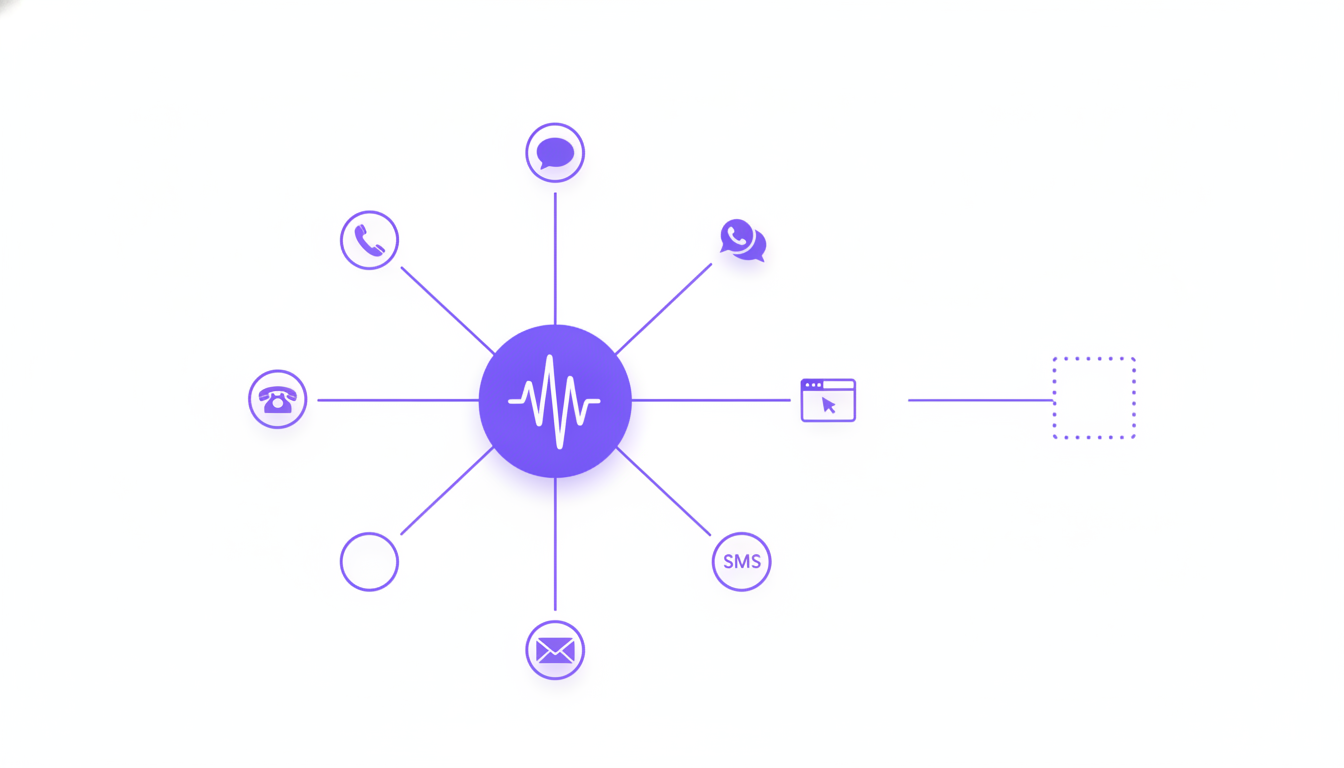
ElevenLabs has had one of the fastest funding runs in AI. In February 2026 it raised $500 million from Sequoia at an $11 billion valuation — more than triple the $3.3 billion valuation it held barely a year earlier — and by May it said it had crossed $500 million in annualized revenue, adding backers like BlackRock, NVIDIA, Jamie Foxx, and Eva Longoria along the way. The product has moved just as fast: ElevenAgents, the company's conversational agent platform, has spent 2026 bolting on channel after channel — WhatsApp, SMS, email, Slack and Zendesk integrations, and alpha support for Telegram, Intercom, and Freshdesk ticketing — on top of its original phone and web widget.
That's a genuinely impressive run, and it's changed how ElevenLabs gets evaluated. It's no longer just "the voice cloning company" — it's now pitched as a full agent platform that businesses compare against dedicated customer support and omnichannel tools. So if you're a support, CX, or ops leader who came across ElevenAgents while researching AI agents for WhatsApp, voice, or chat, this is worth a clear-eyed look: what it's actually good at, where it genuinely still falls short for omnichannel and Arabic-first support, and how to think about alternatives.
What ElevenLabs Agents actually is
ElevenAgents sits inside ElevenLabs' broader audio platform, alongside ElevenCreative (voiceover, dubbing, music) and ElevenAPI (raw text-to-speech/speech-to-text access). It lets you build a conversational agent — voice or chat — configure its knowledge base, system prompt, and tools, and deploy it across the channels ElevenLabs supports. Under the hood, you can run ElevenLabs' own models or bring your own LLM: the platform's pricing calculator lists options spanning Gemini, Claude, and GPT model families, so the "brain" is largely whatever third-party model you choose, while ElevenLabs supplies the voice layer, orchestration, and channel plumbing.
The company's own marketing describes ElevenAgents as running "in 70+ languages" with "11k+ voices," and the landing page cites more than 4 million agents deployed. Enterprise customer stories include Klarna (ElevenLabs' own case study title claims a 10x reduction in time-to-resolution), Revolut, Deutsche Telekom, and Deliveroo — a legitimate roster, and a sign the platform is being taken seriously well beyond hobbyist voice demos.
Where it's genuinely strong
Credit where it's due: ElevenLabs built its reputation on voice quality, and that still shows. Latency is low, the multilingual voice library is large, and for a team that wants a single vendor for both voice cloning/dubbing (ElevenCreative) and conversational voice agents (ElevenAgents), the combined platform is convenient. If your primary channel is phone support or a web voice widget, and your team already has engineering resources to wire up a custom LLM and telephony provider, ElevenAgents is a serious, well-funded option — not a toy.
The recent channel push is also real progress, not vaporware. WhatsApp support shipped with proper documentation and a dedicated webinar; the "new channels" release added SMS, Telegram, and ticketing-system integrations (Intercom, Freshdesk) in one redesigned dashboard, alongside existing Slack and Zendesk connections. For a company that started as a pure text-to-speech API, that's a meaningfully broader footprint than it had a year ago.
Where the gaps still are
Here's the part that matters if you're evaluating this as an omnichannel platform rather than a voice platform with some messaging bolted on.
No native Instagram or Messenger. Go through ElevenLabs' own channel list — on the Agents landing page, the pricing page, and the dedicated "new channels" announcement — and the same set keeps appearing: phone, web, WhatsApp, SMS, email, plus Zendesk, Slack, and (in alpha) Telegram, Intercom, and Freshdesk. Instagram DMs and Facebook Messenger are absent from all of it, as of this writing. For a lot of businesses — especially in retail, e-commerce, and hospitality across the Gulf, where Instagram is frequently the first point of contact — that's not a minor gap. It means running a second tool (or a manual process) just to cover a channel your customers are already using.
Pricing has three separate meters. ElevenAgents plans are priced by call minutes and concurrency — Free (15 min, 4 concurrent calls), Starter at $6/month (75 min), Creator at $22/month (275 min), Pro at $99/month (1,238 min), Scale at $299/month (3,738 min, 3 seats), up to Business at $990/month (12,375 min, 10 seats). That part is at least transparent. But the LLM you choose and any telephony provider are both billed separately "at cost," on top of the plan price, and additional minutes beyond your plan run $0.08/minute (doubling to $0.16/minute if you burst past your concurrency limit). None of that is hidden, exactly — it's all published — but it means your real monthly bill depends on three independent variables (plan, model choice, call volume) rather than one predictable number. Worth modeling out with your own expected volume before you commit.
Voice library breadth isn't the same as dialect depth. ElevenLabs' voice library does include Arabic voices, and third-party voice directories show entries labeled for Gulf and Saudi dialects specifically. That's a real asset. But a support agent needs more than a voice that sounds Gulf Arabic — it needs the speech-to-text and reasoning layer underneath to actually follow Gulf dialect, code-switching, and colloquial phrasing in a live conversation, and that's a harder, less publicly benchmarked claim than voice output quality. If Arabic-first support is core to your business, this is something to test directly with your own real customer phrases before buying, not something to take on faith from a voice sample.
ElevenLabs Agents vs. a true omnichannel platform
| ElevenLabs Agents | Omnichannel platform (e.g., Qalyb) | |
|---|---|---|
| Core strength | Voice quality, latency, large voice library | Voice + WhatsApp + Instagram + Messenger + web + kiosk in one agent |
| Instagram / Messenger | Not offered | Native |
| Yes | Yes | |
| Human handoff | Depends on ticketing integration (Zendesk, Intercom, Freshdesk — alpha) | Built-in human-agent co-pilot with live takeover |
| Pricing model | Plan minutes + concurrency, plus LLM and telephony billed separately at cost | Typically bundled per-conversation or seat-based pricing |
| Arabic/Gulf dialect | Large voice library incl. Gulf-labeled voices; dialect comprehension untested publicly | Built for Gulf-dialect conversation as a core requirement, not an add-on |
| Best fit | Voice-first, engineering-resourced teams already picking their own LLM/telephony stack | Teams that need one agent covering every channel a Gulf customer actually uses |
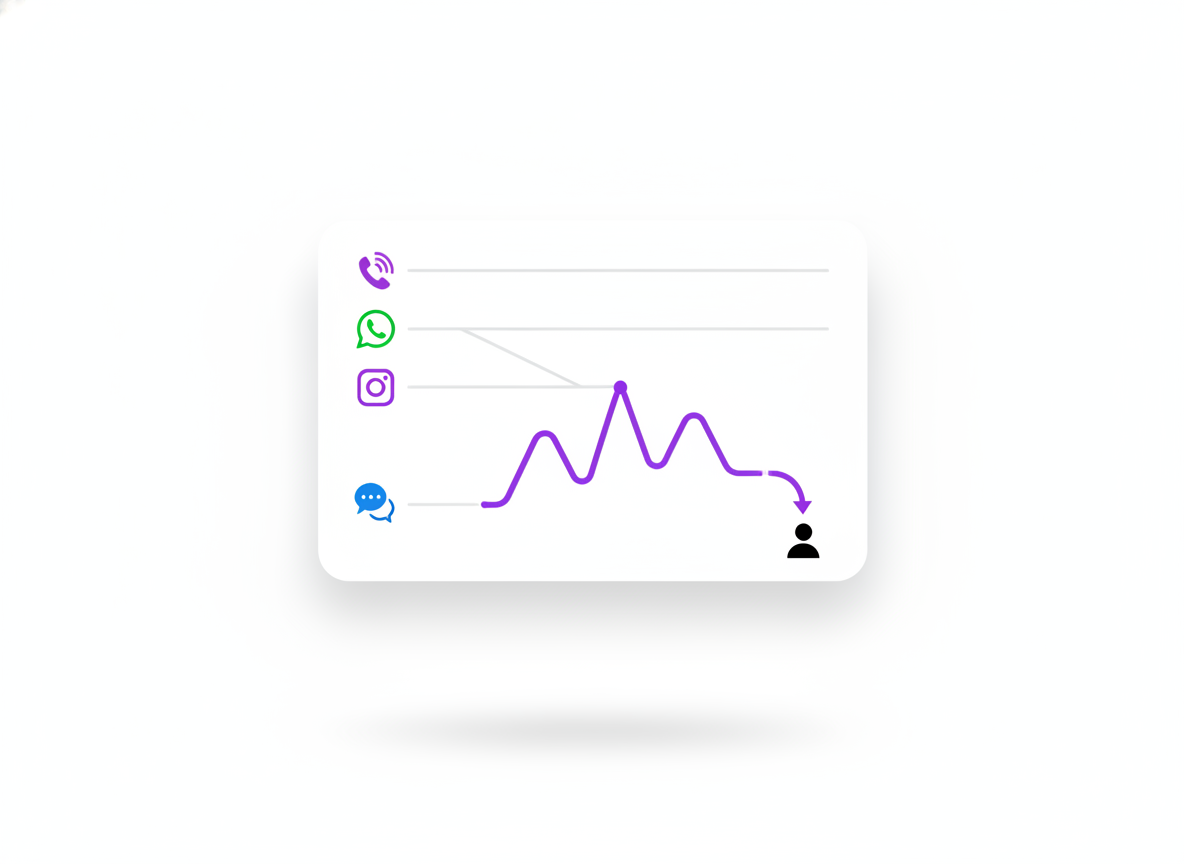
This isn't a "one platform wins everything" comparison — it's a fit exercise. If you're building a voice-first product and have engineering capacity to stitch together your own LLM and telephony vendor, ElevenAgents is a legitimate, well-capitalized choice. If your support volume is split across WhatsApp, Instagram DMs, and phone calls, and you need a human agent to be able to step into any of those conversations without losing context, that's a different requirement than what ElevenLabs is currently built to answer.
A practical checklist before you choose
Whichever platform you're evaluating — ElevenLabs Agents, Qalyb, or anyone else — a few questions cut through the marketing fastest:
Ask for the exact list of live (not "coming soon" or alpha) channels, and check whether Instagram and Messenger are actually on it today. Ask what happens when the AI can't resolve something — is there a real-time human takeover with full conversation context, or does it just log a ticket for someone to pick up later? Run your own three-variable pricing model (plan + model cost + expected call/message volume) rather than trusting the sticker price on the cheapest tier. And if Arabic or Gulf-dialect support matters to your customers, test it with actual customer phrasing — voicemail transcripts, real WhatsApp messages, whatever you have — rather than a scripted demo.
The bottom line
ElevenLabs earned its valuation the hard way: real product velocity, real enterprise customers, and a voice quality bar that's genuinely hard to match. The channel expansion this year is a legitimate attempt to become more than a voice API. But "omnichannel" is doing a lot of work in that pitch right now — Instagram and Messenger aren't there yet, the pricing has more moving parts than it looks like at first glance, and dialect-level Arabic understanding is still an open question rather than a documented strength. If your business genuinely needs one agent across voice, WhatsApp, Instagram, and web — with a human able to jump into any of those conversations — that's a narrower, more specific requirement than most general "AI voice platform" comparisons account for, and it's worth evaluating against exactly that bar rather than against the funding headlines.